
Nvidia's Ampere consumer cards (RTX 3060 through 3090 Ti) share silicon with their professional A-series equivalents but ship with FP16 and BF16 instruction issue rates cut roughly in half. A new open-source kernel module called gpu-unlock removes that restriction entirely on Linux, without touching the Nvidia driver itself.
The performance gains are substantial. On an RTX 3090 Ti running a dense 8192³ GEMM at 450 W, BF16 throughput jumps from 87.5 TFLOPS to 157.4 TFLOPS—a 80% increase. FP16 goes from 87.5 to 118.4 TFLOPS (+35%), and TF32 from 42.6 to 82.6 TFLOPS (+94%). Community reports across RTX 3060, 3070, 3080, and 3090 cards show BF16 GEMM gains ranging from 25% to 81% depending on power limits and chip variant. LLM prefill workloads—which are compute-bound—see 14–36% speedups. Memory-bandwidth-limited tasks like LLM token generation and INT8 inference are unaffected. Outputs verified bit-identical before and after.
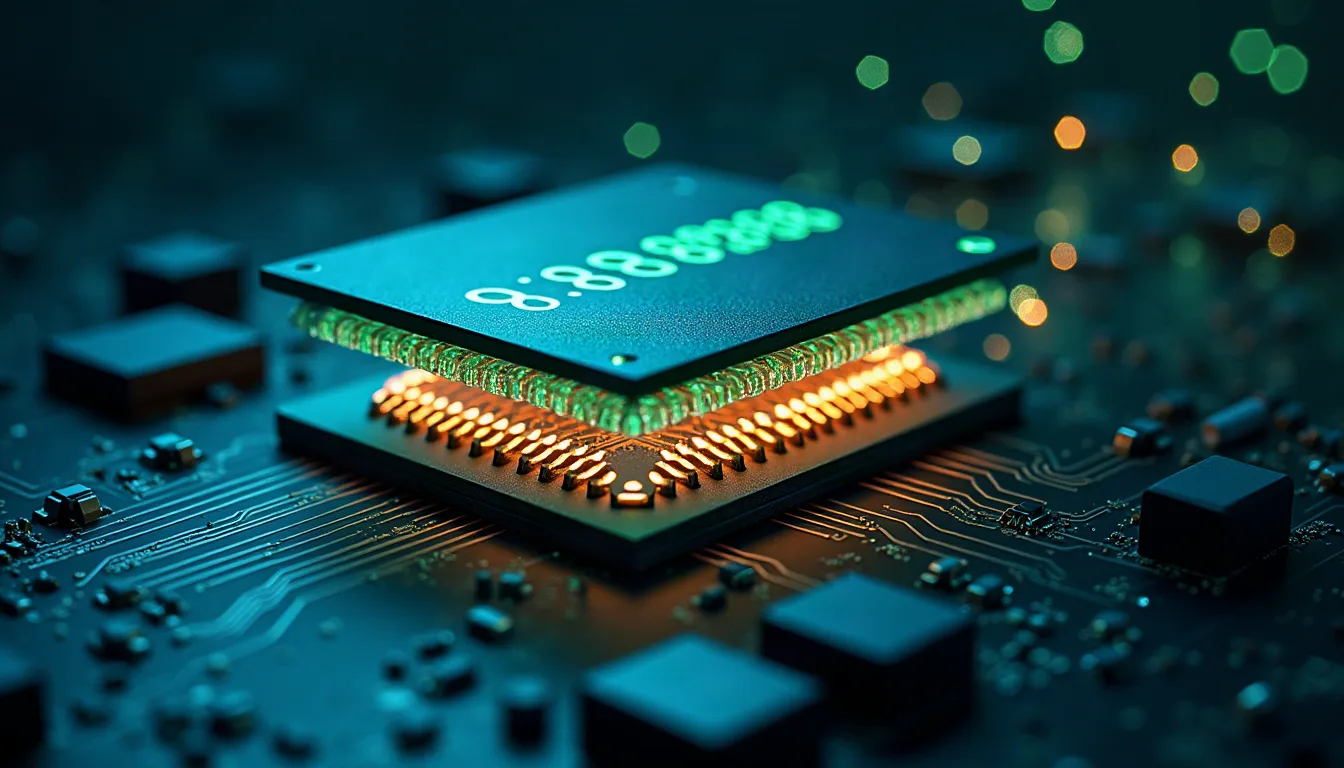
The module works by writing specific speed selector registers (SS0 = 0x88888888 for full BF16 rate, SS1 = 0x8 for IMLA4) and performing a Function Level Reset before the Nvidia driver binds the card. It runs inside the initramfs, meaning the unlock happens early enough that the stock, unmodified Nvidia driver sees the card in its unlocked state from the start. Suspend/resume is handled automatically—since powering off resets the selectors, the module re-applies the unlock on wake before Nvidia resumes the card. This adds roughly one second to resume time.
Installation is straightforward for anyone comfortable with kernel modules. Clone the repo, run make install, then add gpu_unlock.targets=all to your kernel command line. The Makefile detects your distro (Arch, Debian/Ubuntu, Fedora/RHEL) and handles packaging accordingly. You can also target specific cards by PCI address if you want surgical control. Supported chips are GA102, GA103, GA104, and GA106. The key practical advantage over earlier approaches: because the unlock runs before driver binding, you don't need to repatch anything when Nvidia releases driver updates.
For builders running local inference, fine-tuning, or diffusion workloads on RTX 3000 hardware, this is a meaningful free upgrade. The RTX 3090 in particular becomes considerably more competitive for BF16-heavy transformer workloads. Check your results with journalctl -k -b | grep gpu_unlock after first boot. The module is GPL-2.0; the generated firmware payload derives from Nvidia's CMP reference firmware and remains under Nvidia's terms.